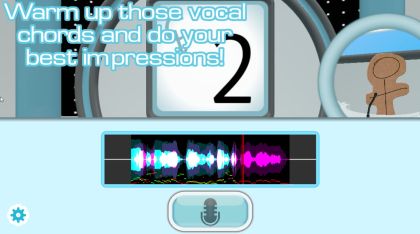
Choicer Voicer Review: a voice-driven experiment that knows exactly what it wants to be
After years of playing games that bury their best ideas under maps, menus, and endless progression systems, Choicer Voicer felt refreshingly direct the moment I launched it. This is a game that puts speech, timing, and decision-making front and center, then asks whether you can keep up. As an experienced gamer, I appreciate how quickly it establishes its identity: there is no long-winded setup, no unnecessary busywork, just a compact idea with enough style to carry it. If you enjoy unusual indies that lean into a gimmick with confidence, this one deserves a look, especially if you want something you can download and play without committing to an enormous time sink.
What makes Choicer Voicer stand out is that it does not try to compete with big-budget spectacle. It aims for tension and personality instead. The core loop revolves around reacting to prompts, shaping responses, and navigating the way your choices ripple through each run. That sounds simple on paper, but the success of the game comes from how neatly it balances clarity and pressure. You are always aware of what is at stake, yet the game leaves enough room for improvisation that every session feels slightly different. That kind of design is harder to pull off than it looks.
Gameplay that rewards instinct more than overthinking
The first thing I noticed was how effectively Choicer Voicer keeps you engaged without overwhelming you. It is structured around fast, conversational exchanges and branching outcomes, so every input matters. The game does not drown you in systems. Instead, it gives you a narrow lane and asks you to drive well. That focus works in its favor because it lets the personality of the writing and presentation do the heavy lifting.
I found the pacing especially strong. Too many indie narrative games spend a lot of time waiting for themselves to become interesting. Choicer Voicer gets to the point quickly, then keeps that momentum rolling. The choices often feel reactive rather than ceremonial, which makes the whole experience feel less like filling in a worksheet and more like surviving a verbal sparring match. If you are the sort of player who likes reading the room and making split-second calls, there is a lot here to appreciate.
There is also a good sense of escalation. Earlier segments act like a warm-up, but the game gradually increases the pressure by demanding faster recognition and sharper judgment. By the time you are deep into a session, small mistakes can snowball in satisfying ways. That creates a nice rhythm of tension and recovery. Even when things go sideways, the game usually gives you enough information to understand why, which is a quality I always respect. Good design should explain failure without lecturing about it.
Presentation: small scale, strong identity
Choicer Voicer does not rely on flashy visuals to make its point. Its appeal comes from cohesion. The art direction, interface, and sound all work together to reinforce the central idea. Messages appear with a deliberate sense of timing, and the audio cues are especially useful because they help sell urgency without becoming annoying. That may sound like a modest achievement, but in a game built around communication, the presentation has to do more than look nice. It has to guide your attention, and this one does that well.
I also appreciated that the game feels designed for legibility first. There is no visual clutter fighting for your attention, and that is crucial when the whole experience depends on reading prompts and responding quickly. Some games confuse “stylish” with “hard to read.” Choicer Voicer avoids that trap. The interface is clean enough that you can focus on the moment-to-moment decisions, which is exactly what a game like this needs.
That said, the presentation is not only functional. There is personality in the way the game frames exchanges and in the tone of its writing. The whole package feels like it knows its own comedic or dramatic rhythm, even when the subject matter stays compact. It is the kind of game that proves you do not need a huge budget to leave an impression if your direction is tight.
Replay value, challenge, and why it keeps calling you back
One of the better surprises in Choicer Voicer is how easy it is to replay without feeling like you are merely repeating work. Because outcomes can shift depending on your choices and responses, the game naturally encourages experimentation. I went back to test different approaches, and that is where it really opened up. A lot of games say they have branching paths; this one benefits from the fact that those branches feel relevant rather than decorative.
The challenge level is also nicely judged. It never feels brutally unfair, but it does expect attention. That balance matters because a game built around decision-making can become frustrating if it punishes you for not memorizing everything. Choicer Voicer instead asks you to learn its language, then rewards you for getting more fluent. The result is a looping sense of improvement that feels earned.
For players who enjoy hunting for alternate outcomes, hidden triggers, or community-discovered techniques, there is room to explore. I would not call this a giant sandbox, but it is the sort of game where fans will naturally start asking whether there are cheats, mods, or unusual routes to test. That curiosity is a good sign. It usually means the game has enough structure to support discussion beyond a single clear path.
Who should play Choicer Voicer?
If you like experimental indie games, you should absolutely give it a shot. If you prefer long-form RPGs, sprawling shooters, or systems-heavy strategy games, this one may feel too focused. But that is not a weakness; it is the point. Choicer Voicer succeeds by being disciplined. It is built around a specific interaction style and commits to it without apology.
I would especially recommend it to players who enjoy games that can be understood quickly but still have depth beneath the surface. It is easy to download, easy to install, and easy to understand, yet it leaves enough room for mastery that it does not feel disposable. That combination is rarer than it should be. Many small games are either too shallow or too demanding. Choicer Voicer sits in a more interesting middle ground.
As for free access, availability depends on the storefront and version you are looking at, but the game’s lightweight structure makes it the kind of title that often suits a quick session on various platforms. If you are hoping for unblocked access in a browser-based or school-friendly setting, that will depend on where it is hosted and how your network is configured. As always, the legal route is the best route, especially if you want stable updates and fewer headaches.
Final verdict
Choicer Voicer is a confident little game with a sharp sense of focus. It does not waste time pretending to be bigger than it is, and that honesty is part of its appeal. The gameplay loop is tense without being exhausting, the presentation is clean, and the replayability comes from meaningful variation rather than artificial padding. From an experienced gamer’s perspective, that is a strong combination.
It is not the kind of release you play because it promises hundreds of hours. You play it because it has a distinct idea and delivers on it with style. If you want something different from the usual release calendar, something you can dip into, study, and revisit, Choicer Voicer is worth your attention. It may not be loud, but it knows how to make its voice heard.
How to download Choicer Voicer
Availability & Launch: Choicer Voicer can typically be accessed through its official store page or publisher listing, depending on your region and release status. Some versions may be free, while others may require purchase, so check the current platform page before you download.
Platforms: The game is usually associated with PC first, with possible support on other platforms depending on the release. If it is not available natively on your device, you may need a cloud service, compatibility layer, or emulator for older builds. Always verify the official download source for the current supported platforms.
Install: After you download the installer or package file, launch it, follow the prompts, and allow the game to finish installing. On mobile or console, use the platform store, sign in, and install directly from the listing.
System Requirements: For PC, expect modest minimum specs, usually a recent dual-core CPU, 4 GB RAM, and integrated graphics for a lightweight indie. Mac and Android support, if offered, should also be listed on the store page, though performance may vary by device.
Cheats / Mods: Cheats and mods are not always officially supported. If community tools exist, use them carefully and only from trusted sources to avoid breaking the game or violating terms of service.
Unblocked Access: Unblocked play in school or work environments depends on the network rules and whether the game runs through a browser or approved platform. If access is restricted, you may need to use an approved download method at home instead.